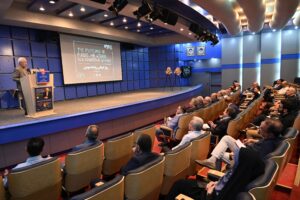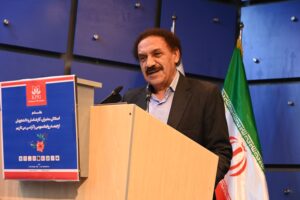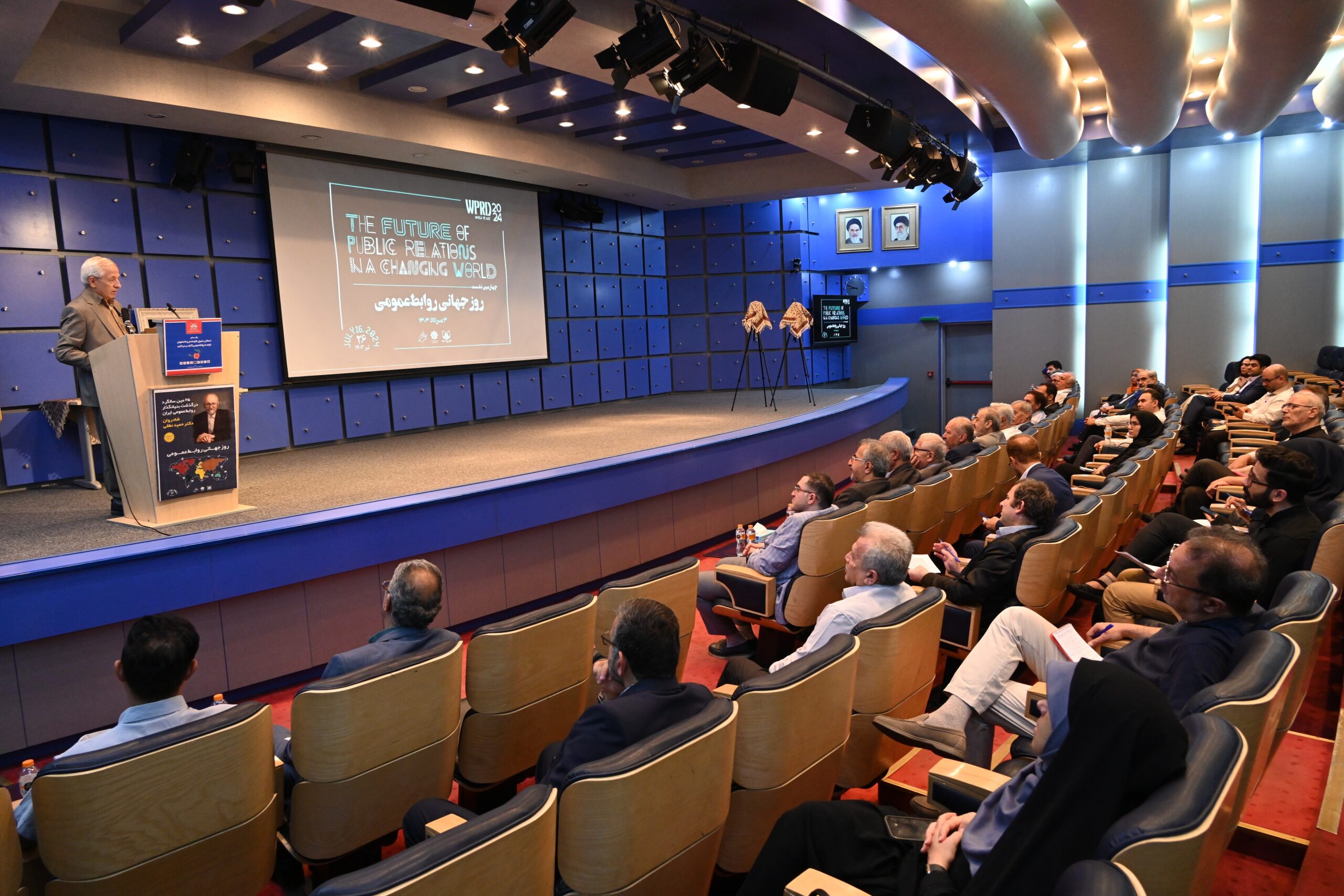
The fourth World Public Relations Day Meeting in Iran was held on July 24, 2024, at the International Conference Center of the Industrial Management Organization. The event, organized by the Kargozar Public Relations Institute in collaboration with the Public Relations Experts Association of Iran and the Public Relations Association of Iran, brought together a number of seasoned professionals, specialists, and activists in the field. The meeting aimed to explore modern trends in public relations and to outline a clear vision for the future of this field.
Section 1: Modern Trends in Public Relations
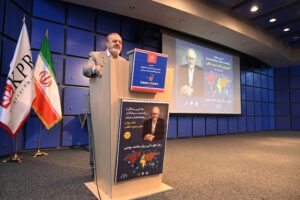
At the fourth World Public Relations Day Meeting, Mehdi Bagherian, the founder and secretary of the meeting, discussed some of the new trends in the public relations industry and provided a bright outlook on the future of the field.
The President of the Public Relations Experts Association of Iran emphasized the importance of creativity and results-oriented approaches in public relations campaigns, referencing the Cannes Lions International Festival of Creativity, one of the most prestigious global events in advertising and communications. He said, “Today, public relations campaigns must not only be creative and innovative but also achieve specific goals and create tangible changes in the lives of their audiences. For this reason, at this year’s Cannes Festival, 30% of the scoring was allocated to campaign results.”
The CEO of the Kargozar Public Relations Institute raised the question, “Are public relations campaigns designed merely for aesthetics, or should they aim to create real change?” He highlighted the importance of focusing on campaign results and added, “As researchers and analysts have said, creativity is necessary but results are sufficient.”
Bagherian also addressed the significance of diversity, equity, and inclusion within organizations and companies, presenting it as a competitive and commercial advantage. He cited a report from Mac oRak, noting that while diversity in the public relations industry remains a serious challenge, companies that prioritize this issue can achieve better results.
The President of the Public Relations Experts Association of Iran, referencing research findings and expert opinions, stated, “Organizations and companies that value diversity, equity, and inclusion are more creative and successful.” He added, “Diversity and inclusion not only mean embracing differences and having a diverse team in terms of race, ethnicity, gender, religion, disability, age, and economic status, but also creating an environment where all members feel valued, respected, and included.”
Another key topic in Bagherian’s speech was the role of artificial intelligence in the public relations industry. He referred to the Mac Rak report on the state of AI in public relations for 2024, which showed that the use of AI tools had increased from 28% in March to 64% in December. He added, “Artificial intelligence is rapidly advancing, and for the first time, participants at the Cannes Festival were allowed entry on the condition of disclosing their use of AI.”
In conclusion, Bagherian emphasized that public relations must always keep pace with technological developments and social changes and capitalize on the opportunities provided by new technologies and diverse approaches. He noted, “The future of public relations is in the hands of public relations professionals, and we must move towards success and impact through innovation, creativity, and a focus on results.”
Section 2: Video Message from the Organizer of World Public Relations Day
Ayeni Adèkúnlè, the convener of World Public Relations Day, expressed his pleasure at the “Fourth World Public Relations Day Meeting in Iran” in his video message. He said: “I am very excited to be with you today to discuss and celebrate our noble and prestigious profession, public relations and communications. This is the fourth World Public Relations Day, and seeing this extensive participation from around the world is very satisfying and exciting for me.”
He recalled that four years ago, during the COVID-19 pandemic, World Public Relations Day was established to draw attention to the power and positive impact of public relations and communications. Adèkúnlè noted the widespread reception of this event, saying: “I am humbled by the acceptance and recognition.”
Adèkúnlè emphasized that the work of public relations professionals is meaningful and impactful, and they have a responsibility to guide organizations and governments in adopting and implementing the ethical principles of public relations. He added: “This year, as we celebrate the fourth World Public Relations Day, I want you all to give yourselves a pat on the back.”
He also invited everyone to spend this day with celebration and joy, and stressed the importance and value of the public relations and communications profession, the ethical principles, and responsibility in this field. Adèkúnlè highlighted that celebrating and acknowledging the efforts and achievements of public relations professionals around the world is a positive and motivating move for continuing the journey.
Section 3: The Future of Public Relations in a Changing World
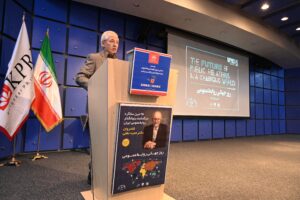
One of the main topics of the meeting was examining new trends in public relations and the impact of new technologies on the field. Professor Ali Akbar Jalali, the father of information technology in Iran, discussed the future of public relations in a changing world and emphasized the importance of adapting to new technologies and using digital tools in public relations. He pointed to emerging concepts such as the Metaverse, artificial intelligence, and virtual reality, highlighting the need for public relations professionals to update their skills and knowledge.
Dr. Jalali also addressed the transformations brought about by emerging technologies in various aspects of life, work, and education, explaining their impact on public relations. The most significant value of these technologies in public relations is the creation of new opportunities for more effective interactions and communications.
Another major focus of Dr. Jalali’s speech was the Metaverse and the future of public relations. He said, “Currently, the Metaverse is emerging as a new frontier for human interactions, and public relations professionals must adapt their strategies for operating in these digital spaces.” He elaborated on the adaptation process and the formation of public relations in the virtual world.
The father of information technology in Iran also discussed the importance of emerging technologies in redefining public relations, explaining that these technologies, by providing new and innovative tools, open up fresh horizons for managing public relations. The impact of artificial intelligence and the Metaverse on the future of public relations was discussed in detail, noting that these technologies could influence decision-making processes and optimize public relations management.
Section 4: Commemorating the 25th Death Anniversary of the Founder of Public Relations in Iran
At the meeting, the 25th Death Anniversary of Dr. Hamid Notqi, the founder of public relations in Iran, was commemorated in recognition of his services and efforts. The event began with an 8-minute video of Dr. Notqi, which detailed the formation of the first public relations unit in Iran in 1941 at the Iranian and British Oil Company. The video clearly illustrated how Dr. Notqi, through his knowledge and relentless efforts, established the foundations of this profession in the country.
Following this, Khosrow Rafiei and Javad Ghasemi delivered speeches highlighting Dr. Notqi’s crucial role in the development and enhancement of public relations in Iran.
Khosrow Rafiei, President of the Public Relations Association of Iran, mentioned Dr. Notqi’s efforts, stating, “Dr. Notqi, by creating scientific and practical foundations in this field, was the pioneer of modern public relations in Iran and played an indispensable role in advancing this profession.” He added, “Dr. Notqi helped many organizations become familiar with modern public relations principles and improve their communication processes. With his visionary and strategic approach, he significantly contributed to educating and training a new generation of public relations professionals who are now active in various organizations across the country.”
Javad Ghasemi, a board member of the Public Relations Association of Iran, also highlighted the impact of Dr. Notqi’s scientific approach on the development of public relations in the country. He said, “Dr. Notqi, with his strategic and innovative perspectives, brought about a major transformation in the development of public relations in the country. His emphasis on two-way communication and collaboration between organizations and their audiences significantly helped raise the standards of public relations in Iran.”
Ghasemi also emphasized that Dr. Notqi, through translating and authoring numerous books and articles, strengthened the theoretical and practical foundations of public relations in Iran, leading to the recognition of this profession as both a science and an art.
At the end of this section of the meeting, attendees honored Dr. Hamid Notqi’s efforts and contributions, celebrating his legacy as the father of public relations in Iran, and reaffirmed their commitment to continuing his path and ideals to further advance the profession. The ceremony demonstrated that Dr. Notqi’s profound and lasting impact on public relations in Iran continues to inspire new generations of professionals and graduates in the field.
Section Five: Challenges and Opportunities in Communications in the Metaverse Era
At the Fourth Global Public Relations Day meeting, Josephine Ayer delivered a presentation titled “Is Video Conferencing the Best We Can Do in the Metaverse Era?” She began her speech by posing two questions that kept her awake at night: “What makes us call ourselves human?” and “Are we truly living in reality?” Ayer, pointing to the continuous merging of humans and technology and the power of virtual reality, discussed the importance of foresight as a distinguishing feature of humanity. She emphasized that foresight enables humans to be profoundly creative and to imagine and shape the future.
She also touched upon the impact of technology on creativity, noting that excessive reliance on video calls could harm team creativity. She cited research from Carnegie Mellon University, which shows that turning on the camera during video calls can diminish the ability for creative teamwork. Ayer added, “If video calls are confusing and harm our creativity, why do we continue to use them?”
Ayer then explored the concept of the metaverse, describing it as an evolved and experiential three-dimensional version of the internet. She mentioned that different brands can create immersive experiential spaces in the metaverse, which can facilitate creative and innovative interactions. She also highlighted the potential of virtual reality within the metaverse, stating that virtual reality could allow individuals to do anything and be anywhere, even if it does not exist in the real world.
She referred to three key features of virtual reality—immersion, interaction, and imagination—as “three magical words,” explaining that these features can help stimulate collaborative creativity. Ayer noted, “With immersion, we feel like we are truly in each other’s presence. When it comes to proximity, our minds cannot distinguish between virtual reality and traditional reality.”
Josephine Ayer further emphasized the importance of imagination in the metaverse, explaining that imagination enables us to envision things that do not exist and turn them into reality. She pointed out the possibility of doing creative work in virtual environments like the summit of Mount Kilimanjaro or the surface of the moon, stating that the metaverse could offer innovative and creative work environments that foster collaboration and interactions.
In conclusion, Ayer spoke about the profound impacts of the metaverse on all aspects of life, stating, “The metaverse will have a profound impact on all aspects of our lives. Like anything else made by humans, it can be entirely positive or unpleasantly negative.” She urged leaders to use their foresight to create the future they want to see.
Section Six: Organizational Anthems; A Symbol of Organizational Identity
In this meeting, Reza Ashari, poet of the collection “Baba Barghi,” discussed enduring works in public relations. He specifically highlighted organizational anthems and their role in promoting organizational culture.
Ashari emphasized the importance of organizational anthems in creating identity and cohesion within organizations, stating, “Organizational anthems are not only effective in enhancing organizational culture but also serve as symbols of organizational identity.”
Section Seven: An Approach to Research, Big Data, and Smart Media
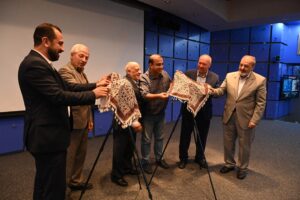
During this session, two valuable books in the field of public relations, published by “Kargozar Public Relations Publications,” were unveiled: “Big Data in Service of Qualitative Research” and “Critical Thinking and Smart Media.” This event underscored the importance of research and innovation in public relations.
The book “Big Data in Service of Qualitative Research,” translated by Ali Shaker, offers practical guidance for using big data in in-depth qualitative research. Mills, Professor of Digital Literacy Studies at the Australian Catholic University’s Learning Sciences Institute, explores topics such as text mining, sentiment analysis, information and data visualization in this book.
Due to its interdisciplinary approach and the provision of examples from education, sociology, and other fields, this book can serve as a useful reference for researchers and practitioners to integrate data-driven insights into their work.
The book “Critical Thinking and Smart Media,” authored by Akbar Karimi, examines the necessity of critical thinking and media literacy in the present era and shows how these skills can help audiences resist the effects of media productions and harmful messages.
The book is organized into three sections: Media Literacy Basics, Critical Thinking, and Smart Media, and covers topics such as the history of media literacy, strategies for teaching creative and critical thinking, and the importance of these skills across various subjects.
Section Eight: Honoring the President of the Public Relations Association of Iran
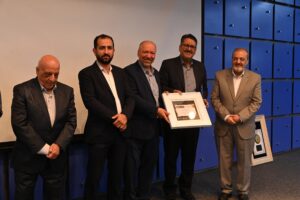
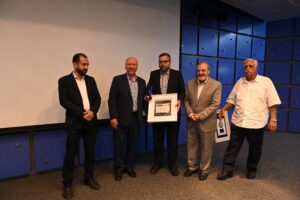
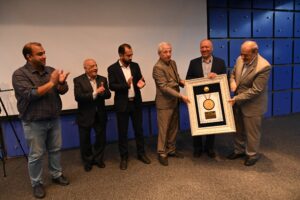
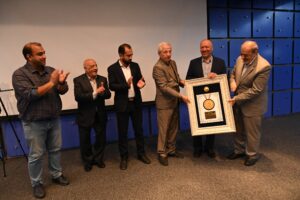
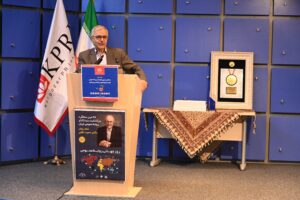
At the fourth World Public Relations Day Meeting, Khosrow Rafiei, President of the Public Relations Association of Iran, was honored for his valuable services over the years. The Iranian Public Relations Excellence Award and Medal were presented to him.
This recognition serves as a mark of appreciation from the Iranian public relations community for Mr. Rafiei’s efforts and contributions throughout his professional career.
Mr. Rafiei thanked all his colleagues and members of the Public Relations Association of Iran for this award and considered this recognition as a result of collective efforts. He stated, “This award and medal will provide additional motivation for my continued activities in this field, and I hope to continue serving the Iranian public relations community.”
Section Nine: Honoring the Efforts of Engineers and Narrators at Ramin Ahvaz Power Plant
Maintaining and ensuring a stable electricity supply, particularly in hot regions like Khuzestan, is of paramount importance. In conditions where extreme heat makes daily life challenging, power outages can significantly complicate the situation. Therefore, the efforts of the engineers at the Ramin Power Plant to sustain electricity production and prevent outages are not only a technical duty but also a humanitarian and social service.
Documenting such efforts and portraying them through media and public relations plays a crucial role in highlighting the value and importance of the work done by those who work tirelessly behind the scenes. Documenting and disseminating these activities not only aids in accurate and proper information dissemination but also increases public trust and solidarity, and formally acknowledges the efforts of individuals.
The engineers at Ramin Ahvaz Power Plant worked with dedication and selflessness to ensure that domestic and industrial electricity was not interrupted in the scorching heat of Khuzestan. These engineers noticed a fault in one of the plant’s sections that, if left unresolved, would lead to a power outage affecting many citizens. Given this situation, they decided to commence repairs without any delay.
The condenser leak repair operation at Ramin Ahvaz Power Plant started at 9 AM on July 13 and continued until 3 AM on July 14. These repairs were carried out under extremely hot conditions, with the temperature in Ahvaz in July being intensely high and the plant environment even hotter. According to one of the plant operators: “If Ahvaz’s weather in July is hell, then the Ramin Power Plant environment is the top floor of this hell.”
Although these engineers were not officially assigned this task, the concern about power cuts affecting homes, hospitals, and organizations drove them to act. The ambient temperature at a seven-meter depth was around 80 degrees Celsius, making it difficult to endure these conditions even for a few seconds. There was no reprimand for not carrying out this operation; the only factor that compelled the colleagues to risk their lives was their dedication.
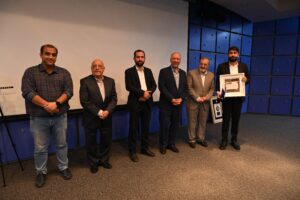
At the end of the meeting, prominent figures and workers in this field were honored. The efforts of the engineers and staff of Ramin Ahvaz Power Plant in establishing and maintaining electricity production were recognized. Additionally, the efforts of public relations colleagues in documenting and disseminating media content were acknowledged. Certificates of appreciation were presented to Mr. Hossein Tarami, Director of Public Relations and International Affairs at the Thermal Power Production Company; Mr. Farhad Pourasgarparast, Deputy Director of Public Relations and International Affairs at the Thermal Power Production Company; and Mr. Davood Soleimani, Manager of the Board Office and Public Relations at Ramin Ahvaz Power Plant.
These recognitions not only provide motivation for the honored individuals and teams but also send a clear message to the public relations community and other industries that effort and commitment are always recognized and appreciated. Thus, these honors can serve as a model for other professions and organizations to pay more attention to the value and importance of acknowledging individual efforts and to promote a culture of appreciation within their organizations.
Section Ten: Honoring Public Relations Professionals
At the end of this meeting, public relations professionals were also honored. Mr. Mohammad Javad Barati Ahmadabadi, Director of Public Relations at Esfahan Steel Company, received the Public Relations Manager of the Year Medal; Dr. Fakhraddin Taherzadeh, Head of Public Relations and International Affairs at Maroun Petrochemical Company, was awarded the Special Prize for Media Relations; Dr. Iman Yaghoubi, Director of Public Relations at Sangan Iron Ore Company, received the Special Prize for Creativity; and Mr. Shaker Khafaei, Head of Public Relations at Tehran Oil Refining Company, was honored with the Special Events Management Award.
Dr. Fakhraddin Taherzadeh, Head of Public Relations and International Affairs at Maroun Petrochemical Company, was recognized with the Special Prize for Media Relations. This award was given for his outstanding efforts in creating and maintaining effective relationships with the media and his high capability in managing media communications.
Dr. Iman Yaghoubi, Director of Public Relations at Sangan Iron Ore Company, was honored with the Special Prize for Creativity. This award recognized his innovative and creative initiatives along with his colleagues and his development of various standards and processes in the field of public relations.
Mr. Shaker Khafaei, Head of Public Relations at Tehran Oil Refining Company, received the Special Events Management Award. This award was given for his exceptional skills in planning and executing important and effective events, particularly the planning and management of retirement ceremonies and documenting the experiences of the retired.
These recognitions highlight the high value and importance of public relations activities and their positive impact on organizations and society. Honoring the efforts of professionals in this field not only provides motivation for their continued valuable work but also serves as a model for others striving for excellence and innovation in public relations.
Section Eleven: Clips and Videos
At The Fourth World Public Relations Day Meeting, a collection of diverse clips and videos was showcased, each addressing various aspects of the field and familiarizing attendees with the history, achievements, and challenges of public relations.
The meeting began with the screening of a beautifully produced opening teaser with attractive visual effects. This teaser briefly introduced the goals and agenda of the meeting and welcomed and congratulated the attendees.
The clip on the formation of Global Public Relations Day discussed the history and development of Global Public Relations Day and highlighted its significance in the global calendar of public relations and communications. The clip pointed out the important role of this day in enhancing public awareness and understanding of the public relations profession.
Ayeni Adèkúnlè, the convener of Global Public Relations Day, delivered a video message welcoming Iranian participants and reminded them of the global significance of the meeting. He praised the efforts of public relations professionals worldwide and the role of public relations in creating effective and sustainable communication.
A notable segment of the meeting was the screening of a biographical video about Dr. Hamid Notghi, the founder of public relations in Iran. This video highlighted Dr. Notghi’s unparalleled role in establishing and developing public relations in Iran and showcased his achievements.
Josephine Ayer, in her presentation titled “Is Video Conferencing the Best We Can Do in the Metaverse Era?”, explored the potential of the metaverse and its profound impacts on all aspects of life.
These videos and clips played a significant role in increasing the knowledge and awareness of the participants, providing a dynamic and educational space for exchanging ideas and experiences. By showcasing these clips, the meeting became an engaging and impactful event that addressed various aspects of public relations and communications.
Summary
The fourth World Public Relations Day Meeting in Iran focused on examining the role and impact of emerging technologies in the field of public relations. Emerging technologies such as the metaverse, artificial intelligence, virtual and augmented reality, the Internet of Things, and social media provide unparalleled opportunities for improvement and transformation in public relations. These technologies, by increasing efficiency, creating interactive and immersive experiences, and automating processes, can help public relations professionals communicate with their audiences more effectively. However, to fully benefit from these technologies, precise identification of needs, training and cultural development, and continuous implementation and evaluation are necessary. The future of public relations will undoubtedly be brighter with the adoption and utilization of emerging technologies.
At the meeting’s concluding section, it was emphasized that emerging technologies, especially artificial intelligence and the metaverse, could act as catalysts for changing and improving public relations processes. Given the remarkable advances in these areas, public relations should move towards digitalization and optimal use of these technologies. Privacy and information security are also significant challenges that need to be considered when using these technologies.
Additionally, the speakers’ remarks highlighted that the public relations industry is undergoing transformation and that creativity, tangible results, diversity, and the use of new technologies are more crucial than ever.
Thanks to all participants and organizers of the meeting for their collaborative efforts and contributions that enriched the event.